

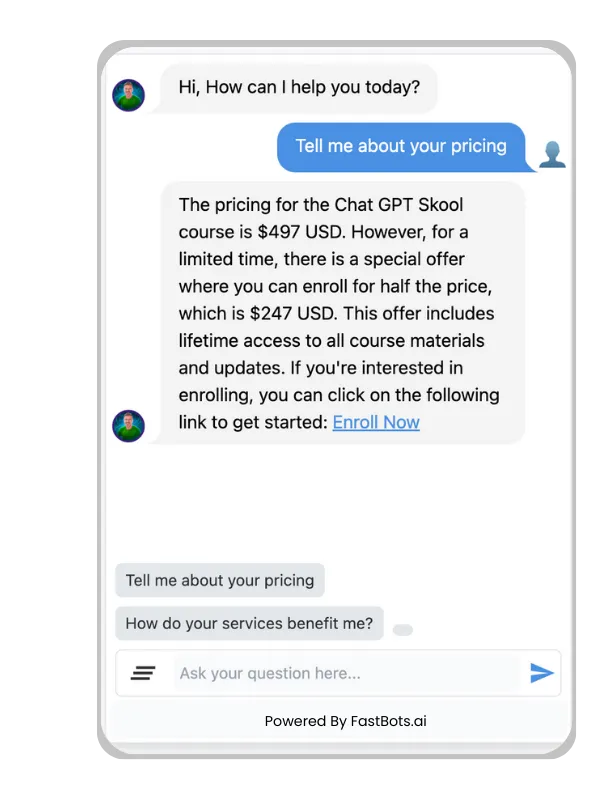
Designing an impressive chatbot landing page is a strategic endeavour that demands attention to detail and an understanding of your audience's needs. Your landing page serves as the gateway to the virtual conversational experience that your chatbot provides. Crafting such a page requires a thorough analysis of user behaviours, preferences, and online habits. This information is critical—it informs the design and functionality of your chatbot, ensuring it aligns with the expectations and requirements of your users.
When approaching the design of your chatbot landing page, consider the user interface (UI) elements that contribute to a seamless user experience. A clean, intuitive design, coupled with persuasive content, guides users towards interacting with your chatbot. It's not just about aesthetics; it’s about creating a user-centric platform where the chatbot can efficiently address queries and engage users. The ultimate goal is to foster a positive interaction that encourages users to return, thereby increasing the likelihood of conversion.
A high-converting chatbot landing page does more than just look good; it functions as the first contact point between your potential users and your chatbot. It's an opportunity to showcase the chatbot's value proposition and to demonstrate how interaction with your bot can be a delightful and beneficial experience. Your landing page should convey the benefits succinctly and invite users to engage with the chatbot. Remember, every element on the page should serve a purpose, guiding visitors towards engaging with the chatbot.
Understanding Chatbot Landing Page Essentials
In crafting a chatbot landing page, the critical elements involve pinpointing who will use your bot and why. Crafting your page with this focus heightens relevance and functionality.
Defining the Target Audience
Firstly, assess who your chatbot is for. Your audience's demographics, interests, and online behaviour will dictate the design and tone of your chatbot landing page. A table to segment your potential audience might look like this:
Audience Segment Interests Online Behaviour
Segment 1 Product X, Topic Y Frequent social media interaction
Segment 2 Service A, Topic B Searches for instant solutions
Understanding these distinctions ensures your landing page resonates with those who visit.
Determining the Chatbot's Purpose
Secondly, clarify what your chatbot aims to achieve. Is it customer support, lead generation, or another function? For instance, a customer support bot should be designed for ease of use and quick problem resolution, while a sales-focused bot might prioritise information sharing for products and lead capture. Here is a simple format for outlining your chatbot’s purpose:
Customer Support Chatbot
- Primary function: resolve customer inquiries.
- Desired outcome: Enhance customer satisfaction.
Sales Chatbot
- Primary function: Provide product information.
- Desired outcome: Generate leads and conversions.
THE EASIEST WAY TO BUILD YOUR OWN AI CHATBOT
In less than 5 minutes, you could have an AI chatbot fully trained on your business data assisting your Website visitors.
Designing with user experience in mind
When designing an impressive chatbot landing page, your main focus should be on optimising the user experience. Crucial aspects include an intuitive layout, visually appealing elements, and ensuring mobile responsiveness.
Layout and Structure
Your chatbot landing page should have a clear hierarchy that guides users through information effortlessly. Begin with a distinct header containing the chatbot’s name and purpose. Below that, use a concise explanation of the bot’s functionality. Utilise bullet points to list benefits or features, aiding quick comprehension. Make sure calls-to-action (CTAs) are prominent, encouraging users to interact with the chatbot.
- Header: Chatbot Name and Purpose
- Description: Brief and to the point
- Benefits/Features:
-- Quick response times
-- 24/7 Availability
-- Personalised Assistance
- CTAs: visually distinct and action-oriented
Visual Elements
Incorporate visuals that resonate with your target audience and support the functionality of your chatbot. Choose a colour scheme and typography that align with your brand and enhance readability. Consider using icons or illustrations to break up the text and add a friendly touch. Keep animations and interactive elements subtle to avoid distractions from the chatbot interaction.
- Colour Scheme: Brand-consistent and visually soothing
- Typography: easy-to-read fonts
- Icons and illustrations: relatable and supportive of the text
- Animations: non-intrusive and enhancing user engagement
Mobile Responsiveness
Ensure your chatbot landing page is fully responsive on mobile devices. Large touch-friendly buttons and an adjustable layout that scales with different screen sizes are non-negotiable for accessibility. Text size should be legible, and interactive elements must function seamlessly on touchscreens.
- Buttons are large and easy to interact with on touch screens.
- Layout: Adjusts to various screen sizes without losing functionality.
- Text Size: Comfortably readable on small screens
- Interactive Elements: Fully operational in a touch-interface environment
Crafting engaging content
Creating an impressive chatbot landing page hinges on having content that captures and holds visitor interest. An engaging chatbot conversation, paired with strong calls-to-action, can convert visitors into users.
Writing conversational copy
To write conversational copy, focus on emulating human dialogue that's both relatable and easy to follow. Consider these steps:
- Understand your audience: Tailor the language and tone to speak directly to your target users.
- Be concise and clear. Use short sentences and simple language to keep the conversation flowing smoothly.
Here's an example table contrasting less engaging vs. more engaging conversational copy:
Less Engaging More Engaging
"Input your details below." "Mind sharing your name with me?"
"Error. Incorrect data." "Oops, that doesn't seem right. Could you double-check that for me?"
Using Persuasive Calls-to-Action
Calls-to-action (CTAs) should encourage users to take the next step. Effective CTAs are:
- Action-oriented: Use verbs that urge the user to take immediate action.
- Visually distinct: Make your CTAs stand out with buttons or contrasting colours.
- Benefit-focused: Highlight the value the user will gain by taking action.
In list format, your CTAs might look like this:
- Sign up now to get instant access to our features.
- Learn More: Discover how our chatbot can save you time.
- Try for free: Experience the full version with no commitment.
Using persuasive CTAs helps guide users towards the desired action, enhancing the overall effectiveness of your chatbot's landing page.
Optimising for conversion
To maximise the effectiveness of your chatbot landing page, focusing on conversion is critical. Every element should be geared towards converting visitors into leads or customers.
Incorporating lead capture strategies
Your chatbot landing page should seamlessly weave in lead capture mechanisms. Consider the following strategies:
- Use gated content. Offer valuable resources in exchange for contact details.
- Utilise offers: Propose discounts or trials that require users to provide their email.
- Leverage chatbot conversations: Design your chatbot to ask for the necessary information during the interaction.
For instance, if a visitor engages with your chatbot, it could prompt:
1. To receive a free e-book, "Enter your email."
2. For a 10% discount code, "Provide your email and join our newsletter."
These prompts engage users and provide them with immediate value, increasing the likelihood of conversion.
A/B Testing for Performance Improvement
A/B testing is an empirical approach to optimising your landing page.
1. Create two versions (A and B) with variations in design or content.
2. Track conversions from each version to determine which performs better.
Consider changing one element at a time, such as:
- Call-to-Action text
- Chatbot greeting message
- Visual elements like images or buttons
By measuring performance changes, you continually refine your page for higher conversions.

Promotion and visibility
To ensure your chatbot landing page reaches a wide audience, focus on optimisation for search engines and active engagement on social media platforms.
SEO best practices
- Keywords: Integrate relevant keywords into your chatbot landing page content, including titles, headers, and meta descriptions, to improve search engine rankings.
- Content Quality: Produce high-quality, original content that addresses your users' needs and questions, enhancing the chance of ranking well in search results.
- Mobile Optimisation: Ensure your landing page is mobile-friendly, as this is a significant factor for search engine rankings and user experience.
- Page Load Speed: Work on reducing the load time of your chatbot landing page, as faster pages are favored by search engines and users alike.
Leveraging social media
Choose the Right Platforms: Identify social media platforms where your target audience is most active. Focus your efforts on these channels to increase visibility.
- Engaging Content: Share engaging, valuable content related to your chatbot that encourages clicks and shares, thus driving traffic to your landing page.
- Consistent Branding: Maintain consistent branding across all social media profiles to build recognition and trust with your audience.
- Social Proof: Highlight testimonials and user experiences with your chatbot on social media to build credibility and attract new users.
Frequently Asked Questions
Your chatbot landing page is the gateway to user engagement. These FAQs are crafted to help you maximise that engagement with essential design elements, user experience strategies, and AI integration techniques.
What are the essential elements to include in a chatbot landing page for maximum engagement?
What strategies can enhance the user experience on a conversational landing page?
What are the best practices for integrating AI into a chatbot landing page?
How can I create a bot landing page that effectively represents my brand?
What tips can you provide for designing a visually appealing and functional chatbot landing page?
How do you balance design and functionality when crafting a landing page for a chatbot?
THE EASIEST WAY TO BUILD YOUR OWN AI CHATBOT
In less than 5 minutes, you could have an AI chatbot fully trained on your business data assisting your Website visitors.